
The Great Shift: Navigating the 2025 AI Algorithm Revolution
2025 didn’t just arrive. It landed, like a plot twist we all sensed but still weren’t quite ready for.
This was the year organic search stopped behaving like a dusty index of keywords and started acting more like a living, learning organism.
Large Language Models, ChatGPT front and centre, became the place people asked, not searched. And as human behaviour shifted, Google had no option but to pivot hard. Their groundwork had been years in the making: Helpful Content, Core Web Vitals, and the steady evolution of E-E-A-T.
Then came the moment that rewrote the script.
Google’s counterpunch: Gemini.
A new foundation model threaded straight into the search experience, most visibly through the arrival of the AI Summary.
Suddenly, the search engine wasn’t just delivering answers. It was writing them.
Fun Fact: The British Brains Behind Gemini
Here’s a detail most people miss:
One of the driving forces behind Google’s Gemini isn’t an American tech giant at all, it’s a British one.
DeepMind, founded in London and quietly one of the UK’s most successful exports, played a pivotal role in Gemini’s development. This is the same team that built AlphaGo, solved the 50-year protein-folding problem, and essentially rewrote what we thought machines could learn.
When Google merged DeepMind’s research with its own AI teams, Gemini became the flagship outcome, a model carrying the unmistakable signature of DeepMind’s probabilistic, science-first thinking.
So the next time someone talks about “Google’s big AI move,” it’s worth remembering:
A significant part of Gemini’s intelligence was born above a London pub, not in Silicon Valley.
Is 2025 the End of Keywords? Why Search Went Conversational
For years, “let me Google that for you” was shorthand for instant information. But in 2025, it quietly ceded ground to a new phrase:
“Let me ask ChatGPT.”
This wasn’t a semantic tweak, it was an online search and behavioural revolution. People stopped feeding machines clipped keyword fragments. They started speaking to them like they were sitting across the table.
Voice assistants hinted at this future, Alexa, Cortana, Siri, but LLMs unlocked the full online behaviour.
Instead of typing “Indian takeaway near me,” users now ask:
“Where’s the best Indian takeaway near Birmingham New Street Station?”
The shift is subtle, but the consequences are seismic.
Optimising content for isolated keywords isn’t merely outdated, it’s actively counterproductive.
Decoding the AI Language: Semantic Understanding & Behavioural Prediction
The 2025 update reframed optimisation around two pillars, broad, powerful concepts that now underpin how websites must evolve:
1. Semantic Understanding inside LLMs
Semantic understanding is the ability of models to grasp how people actually talk, the nuance, the phrasing, the intent behind the words.
The roots go back to Google’s 2013 Hummingbird update, the first true move from “strings to things”, from keywords to context.
Now, that early shift has grown into something far larger.
Your “keyword” is no longer a word at all.
It’s a question.
It’s a purpose.
It’s a story the user is trying to complete.
Not “seo agency in Bromsgrove.”
But:
“Where can I find a good SEO agency in Bromsgrove?”
2. Search Behavioural Prediction in 2026
LLMs learn continuously, every query, every trend, every changed online behaviour writes another line in the algorithm’s playbook.
Historically, Google shipped algorithm updates a few times a year.
Today, LLMs can shift their responses in real time. Thousands of micro-updates in the space of months.
Search is no longer a pipeline of fixed rules. It’s a dynamic, self-teaching ecosystem.
And unlike Google of old, LLMs don’t merely index text. They absorb video, audio, images, and everything with meaning baked into it.
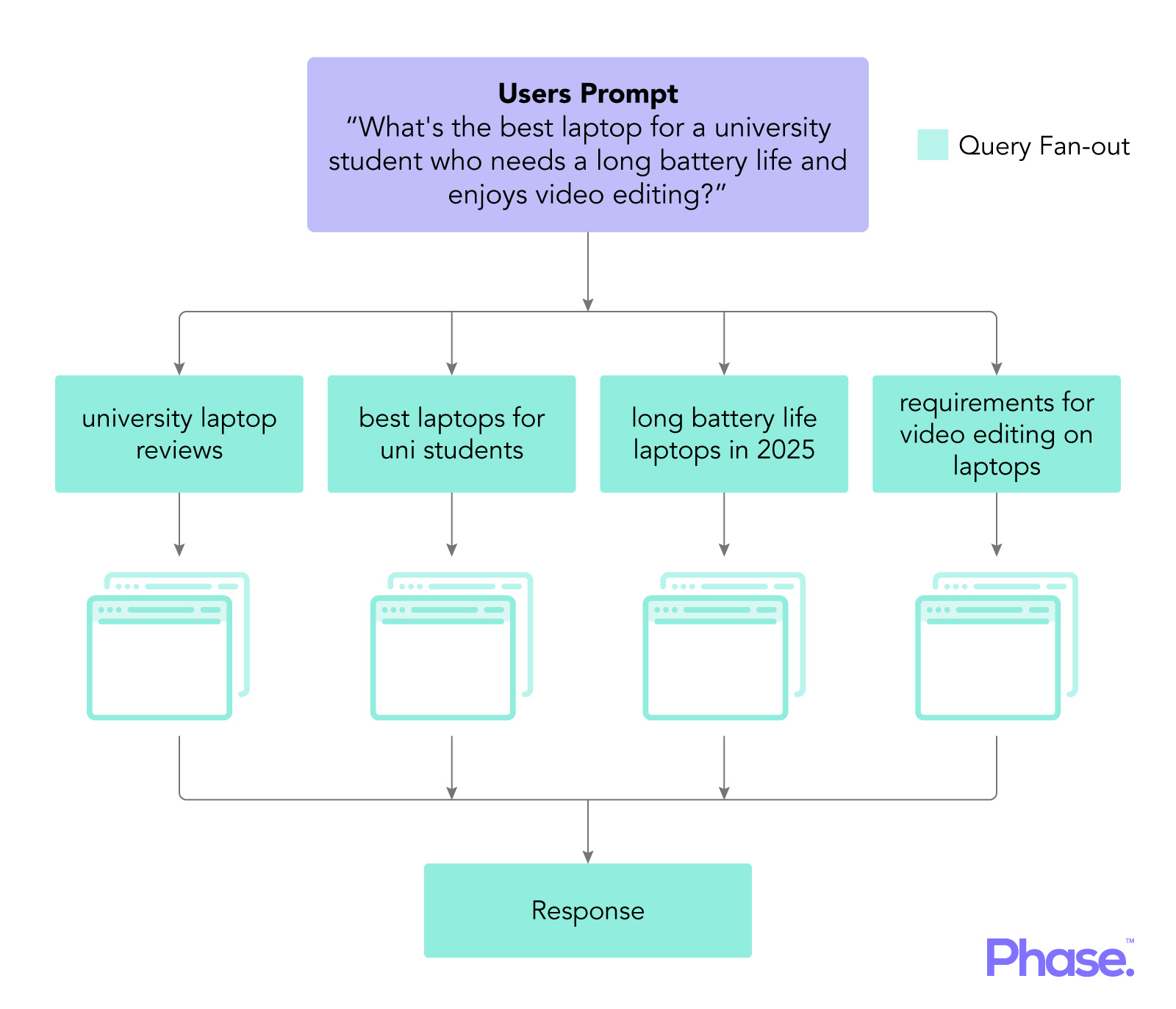
Your New Playbook: 3 Essential Steps for AI Optimisation
Success in this era doesn’t come from bigger checklists. It comes from sharper instincts and faster adaptation.
Here’s the blueprint:
1. Track LLM Traffic (Measure What Matters)
To understand how users reach you through conversational AI, you must create a dedicated channel group in Google Analytics that isolates LLM traffic.
By studying conversions and behaviour from these sources, you begin to reverse-engineer the kinds of questions LLMs are using to funnel users to your pages.
You’re no longer just measuring visits.
You’re measuring conversations.
2. Focus on Intent (Simplify the Journey)
LLMs don’t guess, they interpret.
They understand intention with a precision no keyword strategy ever offered.
If someone wants to buy a t-shirt, the path must be frictionless.
Clear product pages. Clean navigation. A checkout that behaves like it’s been designed by someone who’s actually been through it.
When an LLM sees that your site consistently helps people achieve what they came to do, it learns. And it recommends you more often.
Your site becomes its trusted source.
3. Prepare for Agility (Work at the Speed of Change)
Rigid 12-month plans belong to another era.
LLMs update how they respond faster than any traditional SEO strategy can keep up.
You’re not building a fortress.
You’re learning to sail.
Real-time adaptation isn’t a competitive advantage; it’s about survival.
In summary…In 2026, Is SEO Dead, Dying, or Simply Changing Shape?
It’s neither dead nor dying.
It’s evolving and shedding its old skin.
The AI algorithm shift has pushed SEO beyond keyword lists and into a new terrain shaped by:
- Conversational context
- Intent before indexing
- Real-time adaptation
- Human-centred journeys
- Machine-learned behaviour
SEO isn’t a static discipline anymore.
It’s a new online navigation for brands and websites in 2026, charting a course through winds that shift every minute.
And like any good captain, the ones who thrive aren’t the ones with the perfect map.
They’re the ones who read the sea as it changes.