When Your Browser Stops Answering, and Starts Acting
In a recent interview, Google CEO Sundar Pichai outlined a shift that feels bigger than a product update. He described a future where search engines evolve into AI agent managers, systems that don’t just return information, but act on it.
For two decades, we’ve trained ourselves to type a question and wait.
A list appears. Blue links. Possibilities.
We scan, compare, and decide.
That ritual, quiet, familiar, almost invisible, is starting to change.Something new is emerging in its place. Not a tool that points, but a system that does.And at the centre of it is a simple but radical idea.What if search didn’t just help you find the answer, but handled the problem itself?

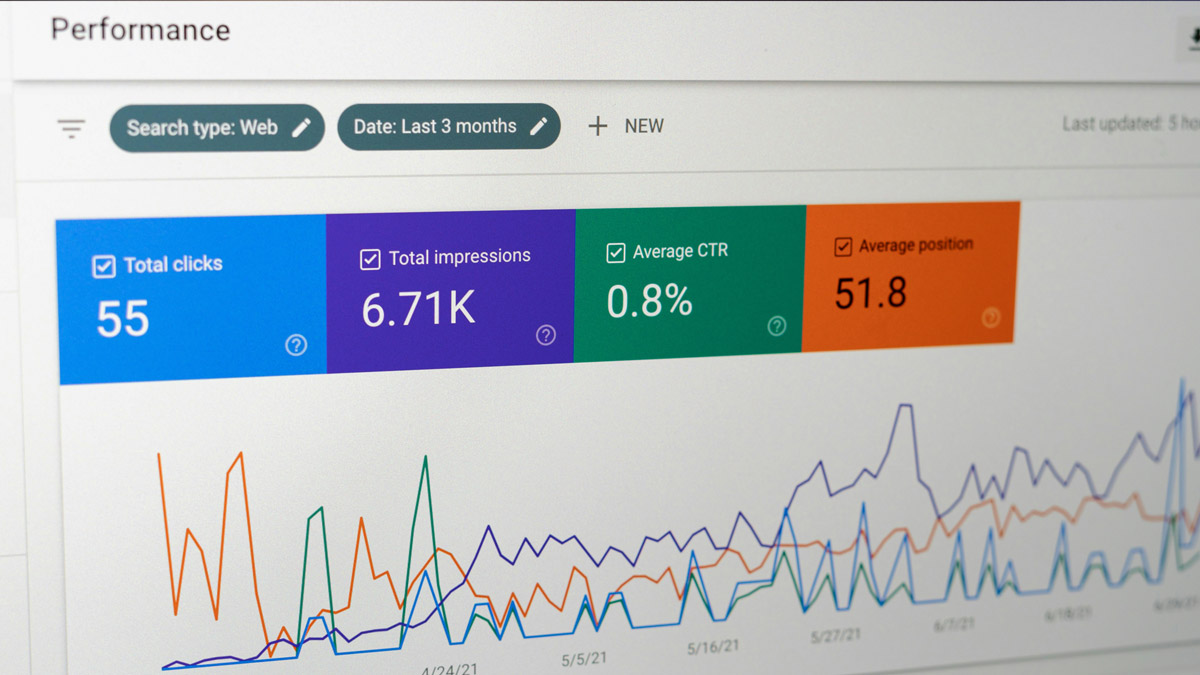
The traditional Google saearch view we are all familiar with
The ground is moving
This is not just an upgrade to search. It’s a shift in how it behaves.
Search, as we’ve known it, has been like a library. Vast, organised, and waiting for you to explore.
The next version feels more like an assistant, active, responsive, already in motion.
Instead of handing you options, it interprets intent.
Instead of offering directions, it starts completing the journey.
You don’t browse. You brief.
From searching to orchestrating
Imagine asking for help planning a trip across a city.
Until now, you’d get links. You’d compare routes, check times, maybe open five tabs before making a decision.
In an agent-led model, that process changes. You ask once, and the system builds the plan for you. Routes are selected, trade-offs are considered, and decisions are made in the background.
Search becomes less about exploring and more about orchestrating outcomes.
You are no longer digging through information. You are setting intent and letting the system carry it through.
The web, once something you navigated, starts to feel like something working on your behalf.
Efficiency replaces discovery. Speed replaces wandering.
And something subtle begins to fade, the unexpected find.
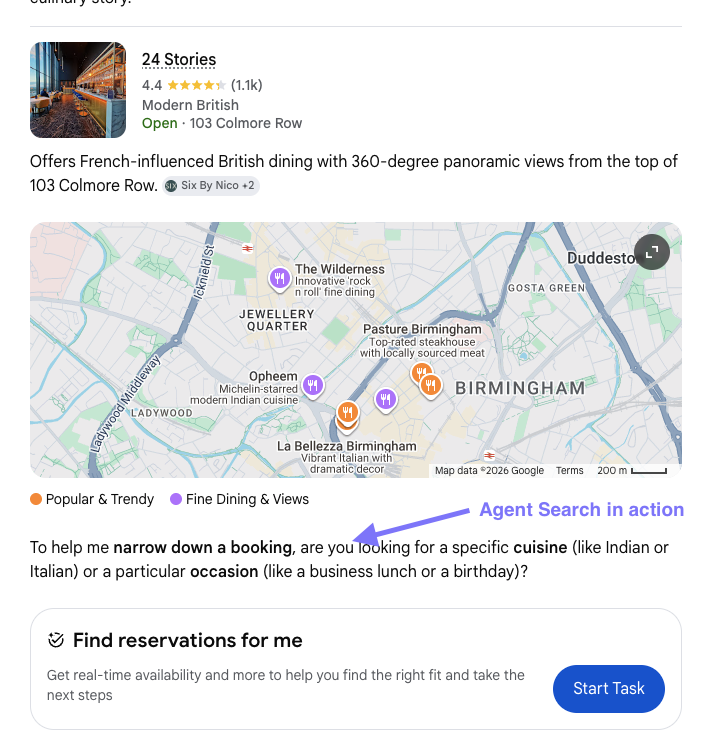
The example above shows the current AI Mode on Google search, already starting to implement future plans. Moving into a task manager rather than a search. Helping with all the finer details.
When a question becomes a task
A search used to end with an answer.
Now, it begins with a process.
Ask about a product, and you may not just get reviews. You might get a recommendation, already filtered, already compared, already decided.
Ask about a journey, and you won’t get a timetable. You’ll get a plan.
These are not static results. They unfold over time, running quietly in the background while you move on to something else.
Search is no longer a moment. It’s a workflow.
Your browser isn’t a window anymore. It’s an engine room.
What happens to the website?
There’s a detail in all of this that’s easy to overlook.
In describing the future, Pichai barely mentions websites.
Not because they disappear overnight, but because their role starts to change.
Pages become raw material.
Content becomes fuel.
The destination matters less than the outcome.
For creators, brands and publishers, this is where things get uncomfortable.
The ecosystem that relied on visibility now feeds systems that summarise, compress, and act, often without sending users back to the source.
It’s a strange inversion.
The web powers the machine.
The machine replaces the journey through the web.
The end of the long view
There was a time when digital strategy meant thinking ten years ahead. Building roadmaps, planning for stability, working towards predictable growth.
That approach is becoming harder to justify.
In a landscape shaped by rapidly evolving AI, even two years can feel uncertain. The curve is steep, and it isn’t slowing down.
Pichai’s message is clear.
Don’t plan for a decade. Adapt for what’s next.
Because in a system that keeps rewriting itself, rigidity isn’t strength, it’s risk.
Expansion, not replacement
This isn’t the death of search. It’s its expansion into something more capable, and more complex.
A system that doesn’t just inform, but acts.
That doesn’t just guide, but decides.
Human capability stretches as a result. Tasks shrink. Friction fades.
But underneath that progress sits a set of important questions.
If destinations matter less…
If creators become less visible…
If the web becomes something we don’t actively visit,
What happens to the ecosystem that made it all possible?
The machine can act.
But it still needs something to consume.
And if we stop seeing the web, will we keep building it?
Where this leaves you
This shift isn’t theoretical. It’s already starting to shape how people search, decide, and interact online.
For brands, it raises a clear challenge. If users no longer browse in the same way, visibility, content strategy, and even the role of your website all need to be rethought.
The opportunity is still there, but it belongs to those who adapt early and understand how to show up in a world where decisions are increasingly made before a click ever happens.
If you’re starting to think about what this means for your business, this is exactly the kind of change we help navigate at Phase. From search strategy to content and visibility in AI-led environments, we work with brands to stay ahead of where digital behaviour is heading, not where it’s been.
The search box is changing. The question is, are you changing with it?